Used DMG MORI Machines We Buy
We buy used DMG MORI machines straight from the shops that own them, one machine or a whole floor. Both heritages sit under one nameplate here: SL, NL and NLX turning from Mori Seiki, DMU and DMC from Deckel Maho, CTX from Gildemeister's Bielefeld side. Here is what moves an offer.
 Call 517-514-5190
- 24–48hQuote turnaround
- Since 2012Buying machines
- DirectNot a broker


How Selling Your DMG MORI Works
Send the plate and the control screen
Fill in the form or phone us with the model string from the data plate, whether it reads Mori Seiki, Deckel Maho, Gildemeister or DMG MORI, plus the build year and what the control is: CELOS, Fanuc, Siemens or Mitsubishi. Hours and a note on any spindle or turret work are useful extras, not requirements.
Your number in 24 to 48 hours
We read the NLX, NHX or DMU you described against what comparable machines are fetching and reply with an offer, typically inside 24-48 hours. We are a direct buyer, not a broker, and have been buying machines since 2012.
Accept, and we line up the move
Once you say yes, we can arrange the rigging, crating, freight and pickup, from a single turning center to a horizontal cell with its pallet pool.
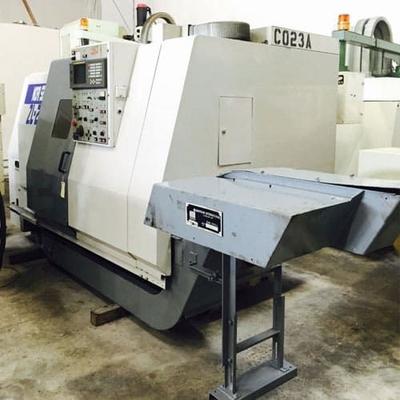
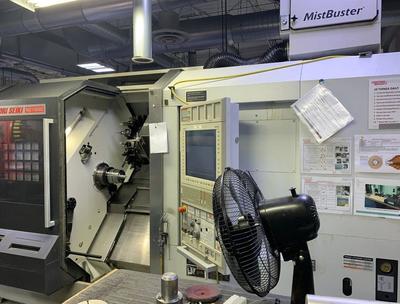
- CNC LathesDMG MORI ZL-25B
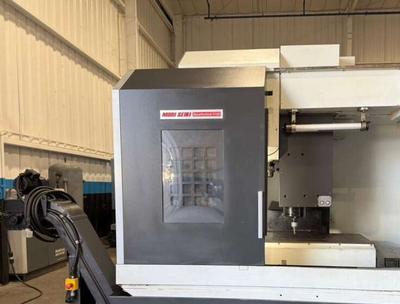
- CNC Multi-Tasking Machines (Mill-Turn / Turn-Mill)DMG MORI 800TC (2015)
- CNC LathesDMG MORI C (1999)
- CNC LathesDMG MORI C (2007)
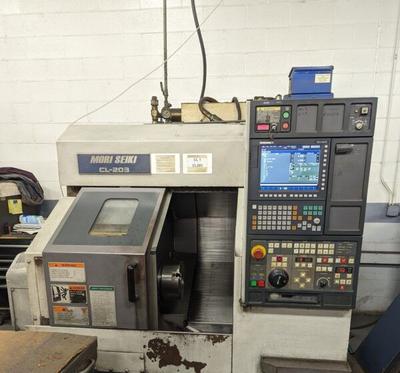
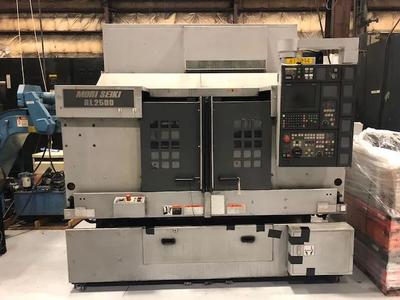
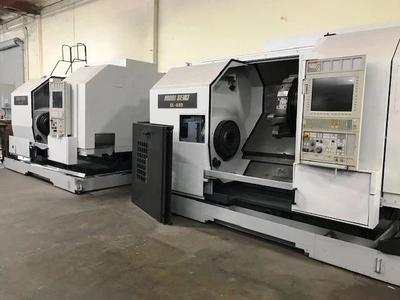
- CNC LathesDMG MORI CL-15
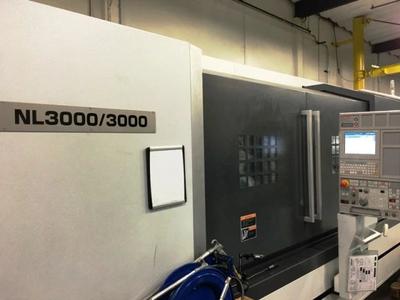
- CNC Multi-Tasking Machines (Mill-Turn / Turn-Mill)DMG MORI NL 2000SY (2005)
- CNC Multi-Tasking Machines (Mill-Turn / Turn-Mill)DMG MORI NT4300DCG 1500SZ (2011)
- CNC Multi-Tasking Machines (Mill-Turn / Turn-Mill)DMG MORI NZ 1500 T2Y2 (2011)
- CNC Turning CentersDMG MORI ZT-2500Y (2003)
- CNC Multi-Tasking Machines (Mill-Turn / Turn-Mill)DMG MORI NT 4300 DCG-1500SZ 5 AXIS (2014)
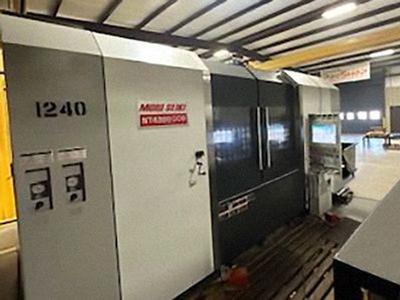
- CNC LathesDMG MORI SL-45B/1500


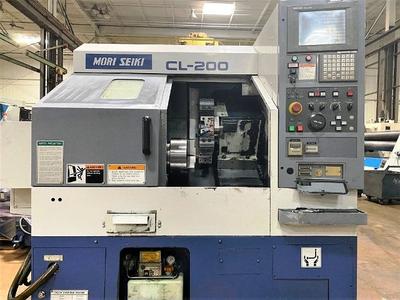
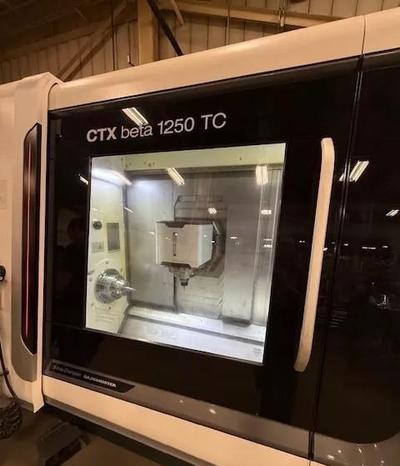
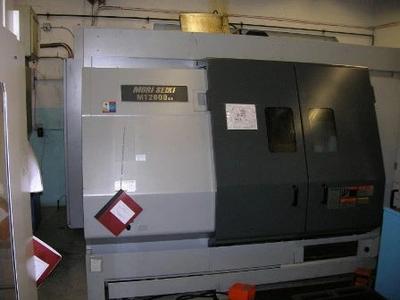
Who Builds DMG MORI Machines Now
DMG MORI is a group of two companies that grew out of a partnership. The parent is DMG MORI COMPANY LIMITED, the former Mori Seiki, with its global headquarters in Tokyo and its European headquarters in Munich. The German member, DMG MORI AKTIENGESELLSCHAFT, keeps its registered office in Bielefeld, where Gildemeister built lathes.
The two worked together from 2009. On 1 October 2013 Gildemeister Aktiengesellschaft became DMG MORI SEIKI AKTIENGESELLSCHAFT and, in Japan, Mori Seiki Co., Ltd. became DMG MORI SEIKI COMPANY LIMITED, and both began selling under the one DMG MORI brand. That was a shared name, not a merger: the 2013 report still calls them two strong companies. In April 2016 the Japanese company raised its stake in the German one to 76.03% and moved to a control and profit transfer agreement.
Mori Seiki, Gildemeister and Deckel Maho: Three Badges, One Group
A used DMG MORI can carry any of three older names, and each points to a different factory tradition. Mori Seiki is the Japanese side; DMG MORI's Davis, California campus began in 2000 as a Mori Seiki research and development division. Gildemeister is the Bielefeld turning side, and DMG MORI still describes its Bielefeld company as its expertise in universal turning, production turning and turn-mill work, with the CTX TC and CLX TC series coming from there.
Deckel Maho is the milling side. DMG MORI's Pfronten page traces it to 1920, when five precision engineers founded Maho; Maho later merged with Deckel, and in 1994 Deckel Maho joined Gildemeister as DMG. That is why a DMU or DMC on your floor may say Deckel Maho on an older casting and DMG MORI on a newer one.
DMG MORI Dates on Its Own Pages
Dates DMG MORI states on its own site and in its annual reports, oldest first. The list stops at 2020, the latest milestone on the pages we could save:
| Year | What DMG MORI says happened |
|---|---|
| 1920 | Five precision engineers found Maho in Pfronten, the start of the Deckel Maho milling line |
| 1994 | Deckel Maho joins Gildemeister as DMG |
| 2000 | Mori Seiki sets up its Davis, California campus as a research and development division |
| 2009 | Gildemeister and Mori Seiki begin their partnership |
| 2012 | The Davis factory opens in July and builds the first American DMG MORI machines |
| 2013 | On 1 October both companies take the DMG MORI SEIKI name; CELOS is presented at EMO in Hanover |
| 2016 | In April the Japanese parent raises its stake in the German company to 76.03% |
| 2020 | The monoBLOCK Excellence Factory opens at Pfronten |
Sources: DMG MORI's Pfronten, Davis and Bielefeld site pages, its 2016 Davis press release, and the DMG MORI annual reports for 2013 and 2016 (published by DMG MORI AKTIENGESELLSCHAFT). DMG MORI's Japanese history pages did not load for us, so Mori Seiki's own founding date is not in this table.
Which DMG MORI Plant Built Your Machine
DMG MORI names Iga, in Japan's Mie Prefecture, as its largest production site, building everything from small turning centers to large mill-turn and 5-axis machines. In Germany, Pfronten builds the monoBLOCK DMU and DMC machines and the XXL portal and gantry mills; DMG MORI says the plant produces 50 different machine types and has capacity for around 1,500 machines a year.
For North American shops the plant to know is Davis, California. DMG MORI's North American factory there opened in July 2012, the first American-built DMG MORI machines followed that year, and today the range made in Davis covers nearly the whole NHX horizontal line, from the NHX 4000 3rd Generation through the NHX 8000. A US-built NHX and a Japanese-built one are bought on the same basis: the machine's condition, hours and pallet setup.
DMG MORI's Own Used-Machine Desk, or Selling to Us
DMG MORI runs its own used-machine business and calls it the world's largest dealer of used CNC machine tools. It takes buyback requests online for DMG MORI machines and other makes, certifies the machines it resells under the DMG MORI APPROVED program and lists them on its CNC-Scout portal. Its Davis plant also houses a Spindle Rebuild Center for machines that stay in service.
Those are the right doors if you are buying new from DMG MORI or rebuilding a spindle to keep the machine. If you want it sold and gone, with no new machine attached, send it to us and we will make a direct offer.
What Moves the Offer on a Used DMG MORI
Control platform is the first question on a DMG MORI, because the same nameplate ships with CELOS, Fanuc, Siemens or Mitsubishi, and which one it runs changes how fast a shop could put the machine back to work. After that it is spindle hours, whether the machine still holds tolerance, and what the configuration actually includes. On the NLX and NT turning machines, a sub-spindle, a Y-axis and live tooling separate an otherwise identical model from a bare two-axis lathe. On the NHX and NH horizontals, the pallet changer and whether a pallet pool came with it weigh as much as the hours. On a DMU, trunnion and rotary condition carry the offer. Jason Puuri scopes each of these himself instead of running a formula, so the model number, the build year, the control screen and an honest hours reading get you a real number faster than photos alone do.
Mori Seiki and Deckel Maho Under One Nameplate
Gildemeister (Deckel Maho Gildemeister) and Mori Seiki, partners since 2009, took the shared DMG MORI name in 2013, so a data plate reading Mori Seiki, Deckel Maho or DMG MORI all lands in this same hub, whichever badge you search for. The two heritages still show in the model strings. SL, NL, NLX, MV and ZL are Mori Seiki names from the Japanese side; DMU, DMC and CTX come from the German side. A plate that reads only Deckel, Maho or Gildemeister is the older German badge, not a separate maker, and we quote it on the machine in front of us. Build year counts for more than the badge: an early SL and a current NLX share a family name and very little else.
What This Hub Actually Holds
Every kind of DMG MORI metal-cutting machine belongs here: CNC lathes and turning centers, vertical, horizontal and 5-axis machining centers, mill-turn multi-tasking machines, and the less common Swiss-type lathes, horizontal boring mills, drilling and tapping centers and gantry or portal mills. The page is organized the way we scope a machine rather than by badge, so the two sections below split it into the turning side and the milling side. Model strings run deep on this make, with near-identical designations separated only by a suffix or a size code, which is why we ask for the full string off the data plate before we talk numbers.
Lathes, Turning Centers and Mill-Turn Machines
On the turning side the Mori Seiki names carry most of the weight: SL slant-bed lathes, NL and NLX turning centers, ZL and NZX for multi-spindle and twin-turret work, and DURATURN. The German turning line arrives as CTX and CLX, with SPRINT and MULTISPRINT production lathes from the same Bielefeld tradition. Mill-turn machines carry NT, NTX or MT on the plate. Read the suffixes before comparing two of them: S signals a sub-spindle, Y a Y-axis, MC live milling. An NLX2500SY and a plain NLX2500 are two different machines to us, and those letters change how the machine gets scoped.
Machining Centers: Vertical, Horizontal and 5-Axis
The milling side splits three ways. Verticals come as MV, SV, CMX, DURAVERTICAL, NV, NVX, ECOMILL, NMV and MILLTAP machines. On the horizontals, NHX, SH, NH and MH, the pallet arrangement usually decides the number, and the size code after the letters (NH4000, NH5000, NH6300, NHX4000, NHX5000) names a different machine, not a trim level of one family. Most of the five-axis work sits with the universal DMU and DMC machines from the Deckel Maho side. Past those families come HSC, ULTRASONIC, LASERTEC and DMF machines, along with horizontal boring mills and gantry mills, each scoped on its own envelope and head.
Selling Yours Instead of Listing It
MTE is a direct buyer, not a broker, an auction platform or a listing service. Three steps. Send the model, year, condition, spindle hours, tooling and control type. An offer typically comes back within 24 to 48 hours, and form submissions get a reply within one to two business days. Accept and we can arrange rigging, crating and freight in all 50 states, and we can arrange the pickup. Condition is not a filter here. A DMG MORI running production, one idle since a job ended, and one down pending a repair decision are all machines we buy, and saying what is wrong upfront gets it scoped accurately. One machine or a whole floor during a changeover works the same, each scoped on its own hours and condition instead of one blanket number. MTE is an affiliate of Superior Machine and Tool, active in used CNC since 2012. Call 517-514-5190.
Sources for the DMG MORI facts on this page
- About DMG MORI AG, DMG MORI AKTIENGESELLSCHAFT
- Annual Report 2013, DMG MORI SEIKI AKTIENGESELLSCHAFT
- Annual Report 2016, DMG MORI AKTIENGESELLSCHAFT
- Pfronten production site, DMG MORI
- Iga production site, DMG MORI
- Davis production site (DMG MORI Manufacturing USA), DMG MORI
- IMTS 2016 - Local Production (press release), DMG MORI
- Bielefeld production site, DMG MORI
- Open House Bielefeld 2026 (press release), DMG MORI
- FAQ, DMG MORI
- Used Milling Machines, DMG MORI UK
Ready to sell your machine? Tell us what you have and get a competitive offer in 24-48 hours. We can arrange the removal, rigging and logistics, and the truck to move it.
Machine Tool ExchangeNationwide CNC machine buyer since 2012
- 24-48h quote
- Coast-to-coast
 24-48h quote
 Coast-to-coast
Customer Reviews
Superior Machine & Tool completed the removal of all our equipment precisely according to our timeline and specifications. Their professionalism and reliability made them a pleasure to work with, and we highly recommend their services.
Closing down our facility was stressful, but these folks made selling our surplus equipment fast and easy. Their team handled payment right away and coordinated removal like pros.
We had a deadline for our asset removal, and they removed everything safely and finished ahead of schedule. The whole process was seamless and stress-free.
These guys made the whole process so easy. I got paid fast, and they picked up the equipment right on time.
Common questions
What determines what a used DMG MORI machine is worth?
Model, year, spindle hours, control type and condition. A CELOS-era NLX with a sub-spindle and a 1990s SL lathe get scoped differently even at similar hours. Send those five details and Jason Puuri puts the number together.
Do you buy older Mori Seiki machines?
Yes, from any era. Mori Seiki took the DMG MORI name in 2013, when it and its German partner Gildemeister adopted a shared brand, and a Mori Seiki data plate is bought on the same terms as a current one, SL, NL and MV plates included.
Do you buy DMG MORI machines with a Siemens or CELOS control?
Yes, and Fanuc and Mitsubishi. The control platform affects how the machine gets scoped, not whether we buy it. Tell us which one it runs and roughly what generation, since that is the detail shops ask about first.
Can you arrange rigging and freight?
Yes. MTE can arrange rigging, crating and freight in all 50 states. We can arrange the pickup.
Will you buy a DMG MORI that is sitting idle or needs work?
Yes. Running production, idle since a job ended, or down while a repair decision is pending are all fine. Say what is wrong upfront so it gets scoped accurately instead of quoted as though it runs.
Do you buy other CNC brands alongside a DMG MORI?
Yes. If you are clearing a mixed floor, we buy Mazak, Makino and Okuma equipment alongside your DMG MORI machines, on one quote and one pickup schedule.
Is a Mori Seiki the same make as a DMG MORI?
Yes, the same Japanese builder under a newer name. DMG MORI's 2013 annual report records that on 1 October 2013 Mori Seiki Co., Ltd. became DMG MORI SEIKI COMPANY LIMITED, while its German partner Gildemeister became DMG MORI SEIKI AKTIENGESELLSCHAFT. The Japanese company is now DMG MORI COMPANY LIMITED, the group parent, with its global headquarters in Tokyo. A Mori Seiki plate on an SL or NL lathe is simply the older badge, and we price it on the machine, not the name.
Does DMG MORI buy back used machines itself?
It does. DMG MORI's used-machine business, which it calls the world's largest dealer of used CNC machine tools, takes buyback requests online for DMG MORI machines and for other makes, then resells approved units through its CNC-Scout portal with up to 12 months of warranty. If you would rather sell to an independent buyer with no new purchase attached, we buy DMG MORI machines outright.
Where are DMG MORI machine tools built?
DMG MORI's own FAQ lists production in Germany (Pfronten, Seebach, Bielefeld and Idar-Oberstein), Italy (Bergamo and Tortona), Poland (Pleszew), Japan (Iga, Nara, Isehara and Nagaoka), China (Tianjin) and the US, at Davis, California. Davis builds nearly the whole NHX horizontal range, Pfronten builds the DMU and DMC monoBLOCK machines, and Iga, which DMG MORI calls its largest site, covers turning centers through large mill-turn and 5-axis machines.
Does DMG MORI list prices for its machines?
Not online. DMG MORI's FAQ says machine prices are not shown on its website and sends buyers to a local DMG MORI branch. A used DMG MORI has no list price either: its value comes from the model, the control, the hours and the condition, which is why we ask for those before we send a number.
Is DMG MORI German or Japanese?
Both, with the Japanese company on top. The group parent is DMG MORI COMPANY LIMITED, which was Mori Seiki until October 2013 and keeps its global headquarters in Tokyo. Its German member, DMG MORI AKTIENGESELLSCHAFT, the former Gildemeister, has its registered office in Bielefeld, and in April 2016 the Tokyo parent raised its stake in it to 76.03% in April 2016 and concluded a control and profit transfer agreement. For a seller the useful part is the factory: an SL or NLX is Japanese-side design, while a monoBLOCK DMU or DMC comes out of Pfronten in Germany.
Thinking about selling DMG MORI Machines?
A DMG MORI can be German or Japanese iron under one badge, a DMU from Deckel Maho or a CTX from Gildemeister's Bielefeld plant or an SL, NL or NLX from Mori Seiki, and the control could be CELOS, Fanuc, Siemens or Mitsubishi. That is why Jason Puuri scopes these one at a time. Send the model number off the data plate and the control screen.
- Fast Response
- Fair Offers
- Hassle-Free Process
 Fast Response


