Used CNC Band Saws We Buy
Used CNC band saws are what this page holds: 100 listings, 8 brands, 87 distinct model numbers between them. Amada accounts for 73 of the 100, with Tos and Grob behind it. Where a build year is recorded, the machines run from 1983 to 2025. Here is what moves an offer.
100 machines, page 1 of 5
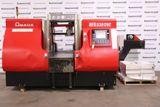 Amada HFA530CNC (2008)
 Amada PCSAW-530
 Grob MS36 (1983)
 Amada CMB-75 (2016)
 Amada HA250W (1990)
- Amada HKA 800
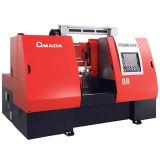 Amada PCSAW430X/AX
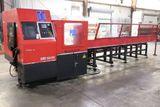 Amada CMB100CNC (2011)
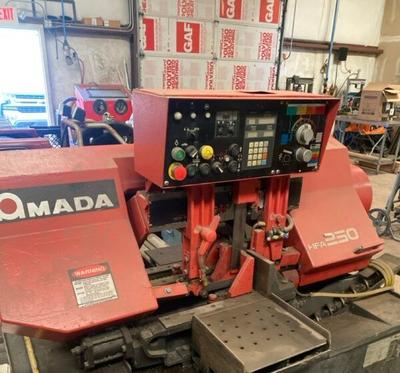 Amada HFA 250W
Year (1989)
Amada HFA 250W
Year (1989)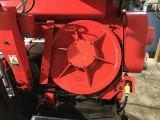 Amada HFA 400W (2013)
 Amada HFA530CNC (2007)
 Amada VT7995M (2020)
 Poreba HBP-413A High (2022)
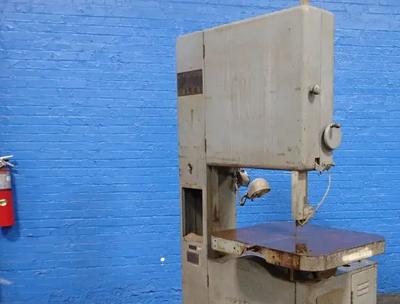 Grob NS-24
 Amada H-1600II ID
- Amada Dynasaw (2015)
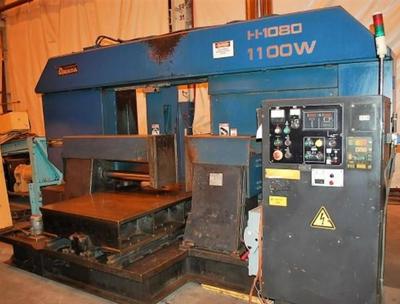 Amada H-1080 (1998)
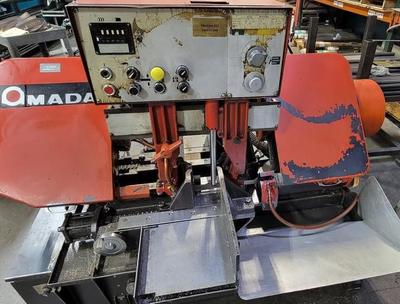 Amada HA-250W (1991)
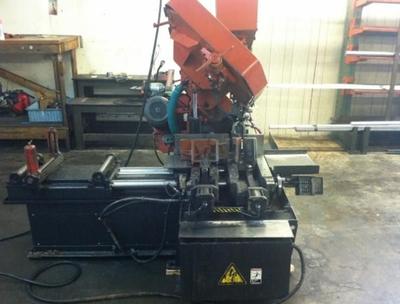 Amada HA-250W (1999)
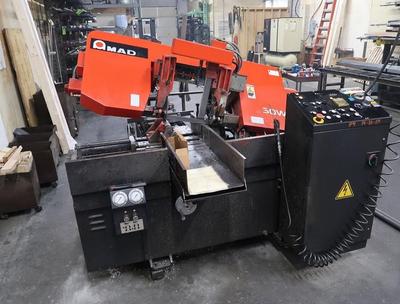 Amada HA-250W (2013)
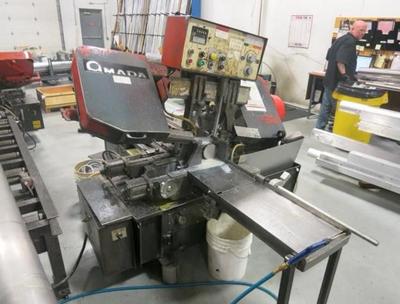 Amada HA250 (1993)
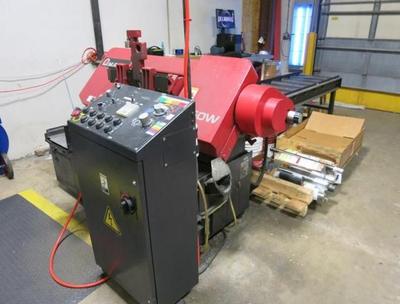 Amada HA250W (2006)
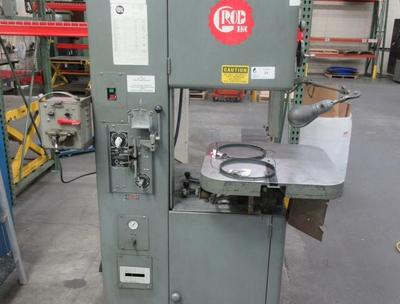 Grob 4V-18
 Tos PWK 40 Brand TOS SVITAVY Type Miter Saws Contact Sales Rep
What Is on This CNC Band Saw Page Right Now
The count is exact: 100 band saw listings across eight makers. Amada holds 73 of the 100, Tos 12, Grob 9, Walter 2, and Poreba, Gleason, Biesse and Heller Group one each. That is the whole table, adding to exactly 100. Amada, Tos and Grob account for 94 of the saws here. Depth of brand is not what this group offers, depth of configuration is. The 100 listings carry 87 distinct model numbers, so nearly every saw is its own machine, not one line stocked deep. A build year is recorded on 36 of them, running from 1983 through 2025. The other 64 carry no year, so no age claim covers the group. Four facet labels feed this page: CNC Band Saws, CNC Horizontal Band Saws, CNC Vertical Bandsaws and Band Saws. Four listings are tagged horizontal and two vertical. The rest sit in general buckets, which describes the labeling, not the machines.
The Model Families That Repeat Here
With eight brands, the model roll-up carries the texture. HA is the largest family at 11 listings, with 3 more recorded as HA250W. HFA follows at 10, plus 2 logged as HFA530CNC. PWR and PCSAW carry 7 each, PCSAW picking up 2 more as PCSAW530X. Then 4V at 4, HK at 4, and a tail of two-count families: DIAMOND, NS, PWK, HKA, DBSAW and CMB. HA-250W appears 6 times, 4V-18 and HFA-400W 3 times each, HFA-260P and HFA530CNC twice. Singles fill out the named list: HK-1300CNC, CMB100CNC, HA-400W, PCSAW-430X, PCSAW-720, PA18-MPC, NS-18, VT4555 and HBP-413A. The 15 repeating families cover 62 of the 100 listings, the largest still only 11. No model table here is deep enough to price from, so each saw is scoped on its own frame, capacity, automation and condition. PWR, PWK and PD30 are TOS Svitavy builds, and with the TD500 units they make up the full Tos count of 12.
What Moves the Number on a Used Band Saw
Four things move the number, and you can tell us all four over the phone. Frame first. A heavy dual-column saw, also called double-column, holds the blade square through big cross-sections and is built for straight production cutting. A scissor-frame or pivot-style machine hinges from one side and suits lighter cutoff duty. Dual-column production machines carry more. Automation second. A manual saw an operator loads and cycles by hand sits below a semi-automatic, which sits below a fully automatic machine with programmable length stops, powered bar feed and indexing. That end shows up in the model tokens here: HFA530CNC twice, HK-1300CNC and CMB100CNC once each. Third, capacity: round and rectangular capacity, blade size, whether it miters. Fourth, condition: hydraulics, blade guides, drive and vise. Jason Puuri, who owns Machine Tool Exchange and its parent Superior Machine Tools in Lansing, Michigan, scopes the saw against those four and puts the number on the table himself.
One Saw, or the Whole Floor
We will be straight about this. A band saw is rarely the most valuable machine on a shop floor, and standalone demand is thinner than for lathes or machining centers. That is not a reason to skip it. It is why most saws we buy move bundled with the primary equipment, and why a standalone saw gets an honest number, not an inflated one. The situations that bring them in are consistent. A shop closes or clears a building, and the saws come out with the lathes, mills and machining centers on one quote and one pickup. A shop upgrades from a manual or semi-automatic saw to an automatic one and wants the old machine gone before the new one lands. A contract ends and cutting capacity outruns the work. A merger or relocation leaves duplicates behind. An owner retires, or an estate settles a shop, and the whole floor clears at once.
Types and Brands We Buy Beyond What Is Listed Here
Eight brands sit on this page. What MTE buys runs wider, on configuration and on nameplate. Configurations: horizontal cutoff and mitering saws, the workhorses in most shops; vertical contour and cutoff saws, including tilt-frame and roller-table machines; fully automatic and CNC bar-feed production saws; dual-column frames alongside scissor-frame and pivot frames; double-miter and single-miter saws for structural and fabrication work; and heavy bundle-cutting machines that clamp and cut a full bundle of bar or tube in one pass. On nameplates, MTE also buys DoAll, HEM Saw, Marvel, Behringer, Kasto, Cosen, Hyd-Mech and Wells saws, whether or not one is listed here today. None of those eight are on this page today, where Amada carries 73 of the 100 listings and Tos and Grob follow. If your make is not above, that is not a no. Send the data plate and we will tell you. A single machine, a cutting cell or a full floor gets quoted the same way.
How the Sale Actually Runs
Three steps, and the first is on you. Tell us what you have: brand, model, year and condition, then the band saw specifics. Horizontal or vertical. Manual, semi-automatic or automatic. Frame type, dual-column or scissor. Round and rectangular capacity. Blade size. Whether it miters. The state of the hydraulics and blade guides. Photos speed this up. If a whole shop is moving, a list of machines and quantities, saws included, starts it. A quote comes back within 24 to 48 hours, valued against current secondary-market demand along with type, automation, capacity and condition. A saw moving inside a larger lot gets priced with the group. Accept it and MTE arranges and pays for rigging, crating and freight nationwide, all 50 states, and handles the pickup. We buy outright, so there is no consignment, no listing wait, no auction and no commission off the back end. The quote you accept is the amount you receive.
Common questions
Who buys used CNC band saws?
Machine Tool Exchange buys them directly, nationwide, horizontal, vertical and automatic alike. We are not a listing service or an auction platform, so you deal with the buyer directly, and we arrange the pickup.
Do you buy a single band saw, or only as part of a whole shop?
Both. Saws move most cleanly alongside the lathes, mills and machining centers in a full-floor purchase, and a standalone saw still gets a fair look and an honest number.
What determines what a used band saw is worth?
Type and frame, automation level, cutting capacity, and the condition of the hydraulics, blade guides and drive. A large automatic dual-column saw carries meaningfully more than a basic manual cutoff saw.
Do you buy manual band saws, or only automatic and CNC ones?
Manual, semi-automatic, fully automatic and CNC saws are all in scope. What matters is that it is an industrial saw with real capacity.
Do you buy a band saw that is not running?
Yes. Running, idle, or needing blade guide, hydraulic or drive work. A saw does not have to run to get an offer, especially inside a larger lot.
Do you buy on consignment, and who handles the pickup?
We arrange the pickup. MTE buys outright, so there is no consignment, no listing wait, no auction and no commission off the back end.
Do you buy used Amada band saws?
Yes, and Amada is the most common brand on this page at 73 of the 100 listings. We buy them whether or not one is listed here today.
Thinking about selling CNC Band Saws?
Eighty-seven model numbers across 100 saws means there is no model table to price yours from, so it gets scoped on its own frame, blade size, miter range and hydraulics. One saw, and Jason Puuri tells you straight what a modest machine is worth rather than inflate it. A whole floor, and the saws ride along. Either way, a number inside a day or two.