Used Citizen Machines We Buy
MTE buys used Citizen CNC machines. Find your model and get a fast, no-obligation quote to sell it to us. Call 517-514-5190.
 Call 517-514-5190
- 503Citizen units indexed
- 24–48hQuote turnaround
- Since 2012Buying machines
- DirectNot a broker


How Selling Your Citizen Works
Send the series, type and options
Fill in the form or call us with the full name from the Citizen data plate, such as a Cincom L20 type VIII or a Miyano BNE-51MSY, plus the year, the bar loader, and whether it has LFV, a B axis or a back spindle. Spindle hours and MCC service records help us price it, but you do not need them to start.
Your quote in 24-48 hours
We compare your Cincom or Miyano with recent sales of the same series and type and send a quote, usually within 24 to 48 hours. MTE is a direct buyer, not a broker, and has been buying used machines since 2012. There is no obligation to accept.
We can arrange the move
Once you accept, we can arrange the rigging, crating, freight and pickup, for one sliding-head lathe or a row of them with their bar loaders. If the machine has Citizen's motion relocation detector, we plan the MCC restart step with you before it leaves the floor.
503 machines, page 1 of 21
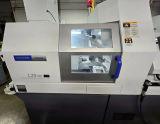
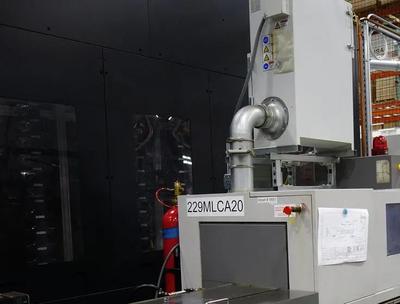
- Metal CuttingCitizen A20-VII (2015)
- CNC Swiss-Type LathesCitizen A20VII 2F7PL (2012)
- CNC Swiss-Type LathesCitizen A32-VII (2013)
- CNC Swiss-Type LathesCitizen C16VII (2006)
- CNC LathesCitizen C32
- CNC Swiss-Type LathesCitizen CINCOM-C16VII (2005)
- CNC LathesCitizen E-32
- CNC Swiss-Type LathesCitizen E25J (1995)
- CNC Swiss-Type LathesCitizen L16-I
- CNC Swiss-Type LathesCitizen L20E (2022)
- CNC Swiss-Type LathesCitizen M32VIII
- CNC Swiss-Type LathesCitizen A20-VIIPL (2010)
- Metal CuttingCitizen A20VII (2019)
- CNC Swiss-Type LathesCitizen A20VIIPL (2010)
- CNC Swiss-Type LathesCitizen A32-2M7P (2015)
- CNC LathesCitizen ATF-713L
- CNC Swiss-Type LathesCitizen B12-I
- CNC Swiss-Type LathesCitizen B12VI (2004)
- CNC Swiss-Type LathesCitizen CINCOM B12
- CNC LathesCitizen Cincom L16
- CNC Drilling & Tapping CentersCitizen CTP29ALJWHAT
- CNC Swiss-Type LathesCitizen K 12 VIIP (2007)
- CNC Swiss-Type LathesCitizen K16 VIP (2005)










Who Makes Citizen Cincom and Miyano Lathes
Citizen lathes are built by Citizen Machinery Co., Ltd., whose capital is financed wholly by Citizen Watch Co., Ltd. It is based in Miyota, Nagano Prefecture, and its Karuizawa Headquarters there also houses the Cincom Miyano Automatic Lathe Museum. Its corporate profile names one line of business: the development, manufacturing and sales of CNC lathes.
The lathe business grew out of the watch company. Citizen Watch Co. was established in 1930 and began producing machine tools in 1936, and in 1970 it developed the Cincom D16 NC lathe. CINCOM stands for Citizen Numerically Controlled Machines, which is why a used Citizen Swiss-type is usually listed as a Citizen Cincom.
Miyano has a separate start. Toshimori Miyano began making industrial precision files in Kameido, Tokyo, in 1929. Miyano Machinery became a wholly owned subsidiary of Citizen Holdings in 2010, merged with Citizen Machinery in 2011 as Citizen Machinery Miyano, and the company changed its name to Citizen Machinery Co., Ltd. in 2015. A Miyano BNE and a Cincom L20 now come from the same maker.
Where Citizen Lathes Are Built
Citizen Machinery's profile lists three works in Japan: Tokorozawa, Kitakami and Saku. Its timeline dates the Kitakami Factory to 1991 and Saku Works to 2017. Outside Japan the timeline adds manufacturing bases in Thailand in 2001, China in 2005 and Vietnam in 2006, and Citizen's branch list places them in Ayutthaya Province, Thailand, in Zibo, Shandong, China, and in Hai Phong, Vietnam. In 2014 the timeline records more than 100,000 automatic lathes shipped.
A Cincom or Miyano on a US shop floor may have come from any of those plants. The plant does not change how we look at it: the series, the type numeral and the condition set the offer.
Marubeni Citizen-Cincom, Citizen's US Arm
In North America, Citizen and Miyano lathes are sold and serviced by Marubeni Citizen-Cincom (MCC), which describes itself as the amalgamation of two companies: Citizen and the Japanese trading house Marubeni. MCC says it was founded in 1984 to market and service the Cincom family of Swiss-type turning centers; Citizen's own timeline lists the US sales office under 1985. Miyano joined MCC's range in 2010, and MCC now quotes bar work from 2 mm to 64 mm across the two brands.
MCC is headquartered in Allendale, New Jersey, has technical centers in California, Illinois and Massachusetts, and sells through an exclusive network of distributors across the United States, Canada, Mexico and Central America.
Cincom Swiss-Types and Miyano Fixed-Head Lathes
Citizen splits its range in two. Cincom machines are sliding-headstock CNC automatic lathes, which Citizen describes as excellent for high-precision, high-speed machining and known for their ease of use. Miyano machines are fixed-headstock CNC automatic lathes that Citizen pitches as high-rigidity machines for heavy machining, in fields such as automotive components, construction machines and hydraulic equipment.
The current Cincom list runs through the A20, B12/16E, L12, L20, L32, D25, M16 and M32, plus the R01/04 for very small parts. The M16 and M32 combine a gang tool post with a turret tool post. On the Miyano side the names start with BNA, BNE, BNJ, BNX, ANX and ABX, among others.
Citizen's own cutting technology is LFV, low frequency vibration cutting: the servo axes vibrate in step with the spindle's rotation, which breaks chips into very small pieces. Citizen's first LFV machine was the VC03 in 2013. In 2021 LFV reached a Miyano turret lathe for the first time, and the relaunched L20 XIIB5 brought simultaneous 5-axis control to the L20.
Cincom Series by Bar Size
On Citizen's spec list for its current sliding-headstock lathes, the number in a Cincom series name matches the largest machining diameter in millimeters:
| Series | Largest machining diameter and length |
|---|---|
| A20 | 20 mm diameter, 200 mm long |
| B12/16E | 12 mm or 16 mm diameter, 135 mm long |
| L12 | 12 mm diameter, 135 mm long |
| L20 | 20 mm diameter, 200 mm long |
| D25 | 25 mm diameter, 250 mm long |
| M16 | 16 mm diameter, 200 mm long, gang tool post plus turret |
| L32, M32 | 32 mm diameter, 320 mm long; the M32 adds a turret |
| R01/04 | 1 mm or 4 mm diameter |
From Citizen Machinery's Cincom product page. Older series that are no longer on that list, such as the C16 and K16, are not shown.
What Decides the Offer on a Used Citizen
Series and type come first. The Roman numeral after a Cincom name is the type: Citizen lists the L20 in types VIII, IX, X and XII, and on the L32 the IX and XII models carry a B axis on the gang tool post. A back spindle, a B axis and the LFV option all change what a machine can do, so the full name from the data plate tells us much of what we need.
Moving a newer Citizen takes one extra step. MCC fits a Motion Relocation Detector so that relocation follows US and Japanese export control laws. A password is required each time the machine is moved; after repositioning, the machine sounds an alarm and shuts down until MCC verifies the new location and issues a new start-up password. MCC says the detector was first introduced in 2001 and has been standard on all new machines since April 2007, so plan to contact MCC before a recent Citizen leaves your floor.
Beyond that, the bar loader that goes with the machine, the tooling, and the hours and service record of the main and back spindles all count.
The Citizen Models We See Most
Most machines under this hub are Cincom sliding-headstock lathes. The L-series (L12, L20 and L32) leads, followed by the A20 and A32, then the M16, M20 and M32 machines that pair a turret with gang tools, along with C16, K16, B12 and E32 machines. Miyano fixed-head lathes such as the BNA and BNE turn up less often.
Citizen reuses series names across generations, so the type numeral and the year matter as much as the series. Its own lists mark them: the L32 (Second generation) on the Cincom list and the BNJ51SY (Seventh generation) on the Miyano list. Some names go back decades; Citizen's museum lists an E32 sliding-headstock NC automatic lathe built from 1977 to 1981.
Early Citizen and Miyano Lathes in Citizen's Museum
The Cincom Miyano Automatic Lathe Museum at Citizen's Karuizawa Headquarters dates each machine by its years of production. The cam and NC automatics on its list:
| Machine | Type and years of production |
|---|---|
| B-0 (AB type) | Sliding headstock cam automatic, built from 1938 |
| AL-S25 | Fixed headstock cam automatic, 1950-1984 |
| D-16 | Sliding headstock NC automatic, 1971-1982 |
| E32 | Sliding headstock NC automatic, 1977-1981 |
| F-25 | Sliding headstock NC automatic, 1978-1983 |
| CNC-7BC/6BC | Fixed headstock NC automatic, 1978-1984 |
| F-12 | Sliding headstock NC automatic, 1980-1985 |
| BNC-75II | Fixed headstock NC automatic, 1983-1985 |
| L16 | Sliding headstock NC automatic, 1986-1989 |
On the museum's list, which stops at the L16 of 1986. Citizen's corporate timeline dates the development of the Cincom D16 NC lathe to 1970; the museum gives its production years as 1971-1982.
MCC Service and Training, or Selling Outright
For a Citizen you plan to keep running, MCC is the support route. It runs a help desk and takes spare parts inquiries, and its training calendar includes L-Series programming classes, BNE-MYY programming and Cincom set-up training at its offices in Allendale, Agawam, Elk Grove Village and Fountain Valley.
For a Cincom or Miyano you want off the floor, we buy it outright. MCC service records, and a list of the tooling and bar loader that go with the machine, help us price it.
Sources for the Citizen facts on this page
- History, Citizen Machinery Co., Ltd.
- Corporate Profile, Citizen Machinery Co., Ltd.
- Overseas Branch, Citizen Machinery Co., Ltd.
- Automatic Lathe Museum, Citizen Machinery Co., Ltd.
- Cincom (Sliding Headstock Type CNC Automatic Lathes), Citizen Machinery Co., Ltd.
- Miyano (Fixed Headstock Type CNC Automatic Lathes), Citizen Machinery Co., Ltd.
- LFV special site, Citizen Machinery Co., Ltd.
- Our History, Marubeni Citizen-Cincom, Inc.
- Cincom, Marubeni Citizen-Cincom, Inc.
- 2026 CNC Training Schedule, Marubeni Citizen-Cincom, Inc.
Ready to sell your machine? Tell us what you have and get a competitive offer in 24-48 hours. We can arrange the removal, rigging and logistics, and the truck to move it.
Machine Tool ExchangeNationwide CNC machine buyer since 2012
- 24-48h quote
- Coast-to-coast
 24-48h quote
 Coast-to-coast
Customer Reviews
Superior Machine & Tool completed the removal of all our equipment precisely according to our timeline and specifications. Their professionalism and reliability made them a pleasure to work with, and we highly recommend their services.
Closing down our facility was stressful, but these folks made selling our surplus equipment fast and easy. Their team handled payment right away and coordinated removal like pros.
We had a deadline for our asset removal, and they removed everything safely and finished ahead of schedule. The whole process was seamless and stress-free.
These guys made the whole process so easy. I got paid fast, and they picked up the equipment right on time.
Common questions
Do you buy used Citizen Cincom and Miyano lathes?
Yes. Cincom sliding-headstock Swiss-types make up most of the Citizen machines in our listings, the L20 by a wide margin, then the A20, M32, L32, C16, K16 and M20, with Miyano BNA fixed-head lathes in smaller numbers. Read the series and its type numeral off the plate, say whether there is a back spindle, and list what stays with the machine: the bar loader, guide bushings, sleeves and tool holders. Photos of the gang tool post and the back working area help us place it.
Will you buy a used Citizen L20 or L32?
Yes, older and newer ones. The Citizens in our listings include Mitsubishi-based Cincom controls, from the System M6 to the M70 and Meldas 700 series, and Fanuc controls such as the 31i and 32i, so give us the control exactly as the screen names it. Then tell us the largest bar it was set up for, how many tools sit on the gang post and on the back tool post, whether a B axis or LFV is fitted, and the hours on the main and back spindles. If it has been idle, say when it last ran a job.
How much is a used Citizen Swiss lathe worth?
Two Citizens that share a series name can sit far apart in value, so we price the machine on the floor rather than the badge. The year and type numeral come first, then the number of controlled axes, the back spindle, the B axis or LFV option, the main and back spindle hours, and the make and length of the bar loader.
What is a Citizen Cincom?
Cincom is Citizen's name for its sliding-headstock, or Swiss-type, CNC automatic lathes, and the word stands for Citizen Numerically Controlled Machines. Citizen's timeline records Citizen Watch Co. developing the Cincom D16 NC lathe in 1970. Citizen Machinery still builds the Cincom line next to its fixed-head Miyano lathes, and in the US both are sold through Marubeni Citizen-Cincom.
What does the type numeral on a Citizen A32 or L20 mean?
The Roman numeral after a Cincom series name is its type, and one series is sold in several types with different equipment. Citizen's spec list gives the L20 in types VIII, IX, X and XII, and on the L32 only the IX and XII models carry a B axis on the gang tool post. Read the whole name, type included, off the Citizen data plate when you ask us for a quote, because two machines that share a series name can be built very differently.
Is the L20 Citizen's best-selling Swiss-type lathe?
Yes. Citizen calls the L20 its best-selling Cincom machine, and Marubeni Citizen-Cincom calls it a machine synonymous with the history of Cincom. On Citizen's spec list it takes bar up to 20 mm in diameter. Citizen also says about 60% of the L20s bought in Japan are ordered with LFV, its low frequency vibration cutting option, so tell us whether your L20 has LFV fitted.
Is the Miyano BNX-51MSY a Citizen machine?
Yes. Miyano Machinery became a wholly owned subsidiary of Citizen Holdings in 2010 and merged with Citizen Machinery in 2011, so Miyano fixed-headstock lathes are now Citizen Machinery products. Marubeni Citizen-Cincom, Citizen's US sales company, lists the BNX-51MSY as a classic machine redesigned for the new age of manufacturing, and sells it beside the Cincom Swiss-types.
Thinking about selling Citizen Machines?
A used Citizen is priced on what the data plate says: Cincom or Miyano, the series, the type numeral and the options fitted, then on the hours and the bar loader that come with it. Send us those details and we come back with a number for that one machine, scoped on its own condition rather than as a generic Swiss lathe.
- Fast Response
- Fair Offers
- Hassle-Free Process
 Fast Response


