
Used Amada Machines We Buy
Used Amada machines rank seventh among the 126 brands in our catalog, 2,190 listings, and Machine Tool Exchange buys them straight from the shops that own them. Metal Cutting is the largest category label here at 1,108 listings, ahead of 372 press brakes and 197 punching machines. Build years on file run 1971 to 2026. Here is what actually moves an offer.
2,190 machines, page 1 of 92
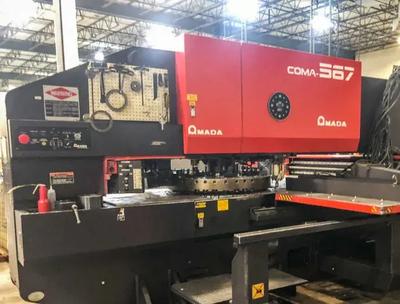 Amada AMADA (1989)
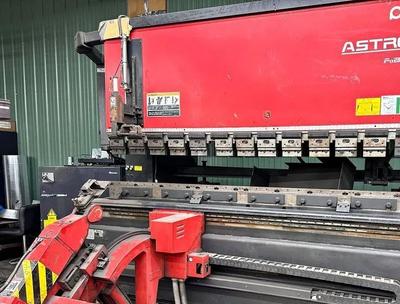 Amada AMADA (2000)
 Amada AC2510 (2022)
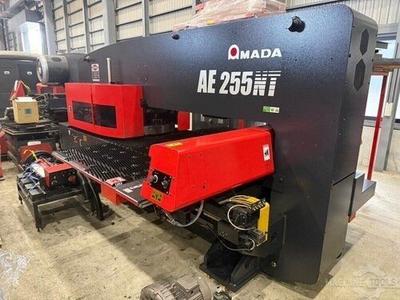 Amada AE-255NT (2018)
 Amada Alpha LC2415 III 4 kW
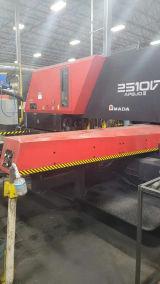 Amada APELIO (2001)
 Amada ARIES255NT (2019)
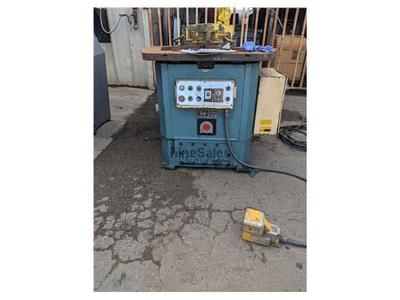 Amada CSW (1985)
 Amada EGB4010E-M15 (2025)
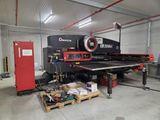 Amada EM2510NT
Year (2005)
Amada EM2510NT
Year (2005)- Amada EMK 3510 NT
- Amada Ensis 3015 AJ 3kW
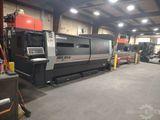 Amada ENSIS 3015 AJ FIBER (2018)
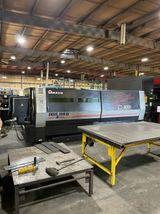 Amada Ensis 3015AJZ (2020)
- Amada FBD-1253
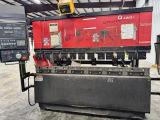 Amada FBD-8025E (1991)
- Amada FBD8025E
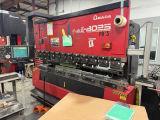 Amada FBD8025NT (2000)
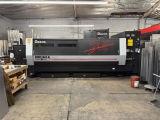 Amada FOL3015AJ (2017)
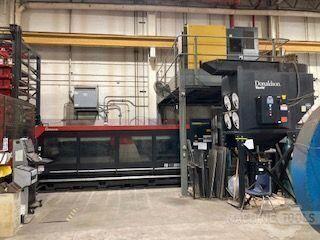 Amada FOM2-3015 NT (2012)
 Amada GS II 630 (2015)
- Amada GX II 630
 Amada HA-400 (2000)
 Amada HDA-250 (1985)
How the Amada Listings Break Down by Machine Type
All 2,190 Amada listings sit in exactly one category, and the split is not the one most fabricators picture. The catalog's broad Metal Cutting label carries 1,108 of them, more than every other category put together at 1,082. Past that label the named buckets read cleanly: 372 press brakes, being 369 filed as CNC Press Brakes and 3 as Press Brakes; 197 punching machines spread across six punch and turret-punch labels; 167 laser cutting machines, split 122 CNC Laser Cutting Machines and 45 CNC Laser Cutters; 153 saws, led by 69 CNC Band Saws and 67 CNC Saws; 50 shears; and 30 grinders. A few counts surprise people on an Amada page: 16 boring mills, 14 automation and pallet systems, 14 lathes, and 29 filed as miscellaneous. Read a category as where a listing got filed, not as a spec. The data plate model number is what places a machine.
Amada Model Families We Log Most, and the Long Tail
RG is the largest model token in this hub at 144 listings, then HFE at 87, FBD at 83, PEGA at 82, VIPROS at 80, and LC at 57. On the brake side that is RG, HFE, and FBD, plus HFB at 43, HG at 19, HDS at 18. Turret punching runs PEGA and VIPROS, then EMK at 16, ARIES at 13, AE at 13, and EM at 9. Lasers are ENSIS at 36, FO at 27, LCG at 15, QUATTRO at 12, FOM2 at 10, and EML at 8 for punch-laser combos. Band saws are HA at 38 and HFA at 28. The strings a searcher types are here too: RG-80 on 16 listings, RG-50 on 15, M-3060 on 13, HA-250W on 12, EM2510NT on 8, and ENSIS 3015 AJ FIBER on 6. Behind those, 1,515 distinct model strings across 2,190 listings, so most Amada numbers here appear once or twice.
What Moves the Offer on a Used Amada
Control generation is the first thing we ask about. A machine on a current Amada AMNC screen and one on an older or Delem-class control are two different conversations before anything else, and with build years on file running 1971 to 2026, a 1980s RG and a current ENSIS sit at opposite ends of that span. After that, the drivers get specific to the machine. On a laser it is source type, wattage, and run hours. On a press brake it is tonnage, bed length, and how many back-gauge axes are under control. On a turret punch it is tonnage, station count, hit rate, and servo-electric versus hydraulic drive. On a shear it is cutting length, maximum thickness, and the CNC back gauge. Included tooling, dies, and attached automation count, and so does whether the machine is producing accurate parts today. Jason Puuri scopes each one himself rather than running a formula.
What to Have Ready Before You Call
Start with the model, serial number, year, and an honest read on condition. The model number does real work here. Our own Amada catalog holds 1,515 distinct model strings across 2,190 listings, so the data plate is what separates an RG-50 from an RG-100, or an EM2510NT from an AE-2510NT, before anyone talks about a number. Then add what fits the machine. Laser: source type, wattage, run hours. Press brake: tonnage, bed length, back-gauge axes. Turret punch: tonnage, station count, hit rate. Shear: cutting length and maximum thickness. Control type on anything, current Amada AMNC or older. Photos help and are not required, and the three that answer the most questions are the control screen, the ram and back gauge, and the laser head or resonator. Clearing more than one machine? A plain list of models and quantities is enough to start, and we will sort the rest out on the call.
Why Fab Shops Sell an Amada
Six situations account for most of the Amada machines that come off a floor. The biggest is a cutting upgrade, CO2 to fiber or a step up in wattage, and both generations sit in this hub at once: FO at 27 listings and FOM2 at 10 on the older side, ENSIS at 36 and LCG at 15 on the fiber side. Second is a move into robotic bending or load-tower automation, and the catalog backs that up with 14 automation and pallet systems plus ASR, LST, and EG tokens in the family roll-up. Third and fourth are shop downsizing or owner retirement, and facility consolidation or relocation, where duplicate machines go surplus in one move. Fifth is capacity rebalancing after a contract winds down. Sixth is an estate sale or a business liquidation. In every case, MTE buys the displaced machine outright, so it is gone before the new install lands.
Selling to MTE Instead of Brokering or Auctioning It
MTE is the buyer, not a broker, a marketplace, a consignment shop, or an auction. No commissions and no listing fees, so the number you accept is the number you receive. We buy in any condition, running, idle, under power, or decommissioned. One band saw in a back corner and a full fabrication floor get the same handling, one quote and one pickup, and we arrange and pay for rigging, crating, and freight in all 50 states, with the pickup arranged for you. Machine Tool Exchange, founded in 2012, is an affiliate of Superior Machine and Tool and a direct used-equipment buyer, not an Amada dealer or service center. If the floor is mixed, the Amada does not have to leave alone. We also buy Mazak, Haas, Okuma, Doosan, DMG MORI, and Makino equipment, so a shop clearing a laser, a brake, and a machining center moves all of it in one transaction.
Common questions
What kinds of Amada machines does MTE buy?
Fiber and CO2 lasers, CNC press brakes, turret punch presses, shears, and band saws, any condition, any quantity, from one machine to a full fabrication floor.
How fast can I get a number on an Amada?
Usually 24 to 48 hours once we have the model, serial, year, control type, and condition. Wattage and run hours, or tonnage and station count, shorten it further.
Do you buy non-running or older Amada machines?
Yes. Running, idle, under power, or decommissioned all get an offer. Older CO2 lasers and hydraulic brakes are still machines we buy, and build years here go back to 1971.
Does the control generation change the offer on an Amada?
More than any other detail. A current Amada AMNC control and an older or Delem-class unit put the same iron in two different places. Build years on file here run 1971 to 2026, so that gap can be wide.
What details raise the number on a press brake or turret punch?
On a brake: tonnage, bed length, and back-gauge axes. On a turret punch: tonnage, station count, hit rate, and servo-electric versus hydraulic drive. Tooling and dies count too.
Who pays for rigging and freight, and who handles the pickup?
MTE arranges and pays for rigging, crating, and freight nationwide, and handles the pickup. No consignment, no listing fee, no waiting on a third-party sale.
Will you buy the whole fab floor, not just the Amada machines?
Yes, on one quote and one pickup. Mazak, Haas, Okuma, Doosan, DMG MORI, and Makino are brands we buy, so a mixed floor does not need two transactions.
Thinking about selling Amada Machines?
Fabricators shopping a used Amada ask about the control first, which is why an ENSIS on a current AMNC screen draws a different conversation than an RG-80 on an older Delem-class unit. Send the data plate and a photo of that screen, and Jason Puuri weighs it against laser source hours, ram and back-gauge condition, and whether the machine still bends accurate parts.